 Lea
Would you let an AI buy your next phone? Read this first.
Researchers put an AI shopping assistant in front of a fake store. The result is a reason to keep a close eye on checkout, even when the shopping feels effortless.
Shopping is exactly the kind of chore people want to hand off. Find the model, compare the prices, avoid the endless tabs. Ideally, your assistant returns with the right product at a good price. But choosing a product and deciding whom to trust with your money are two different jobs.
The fake shop looked like the answer
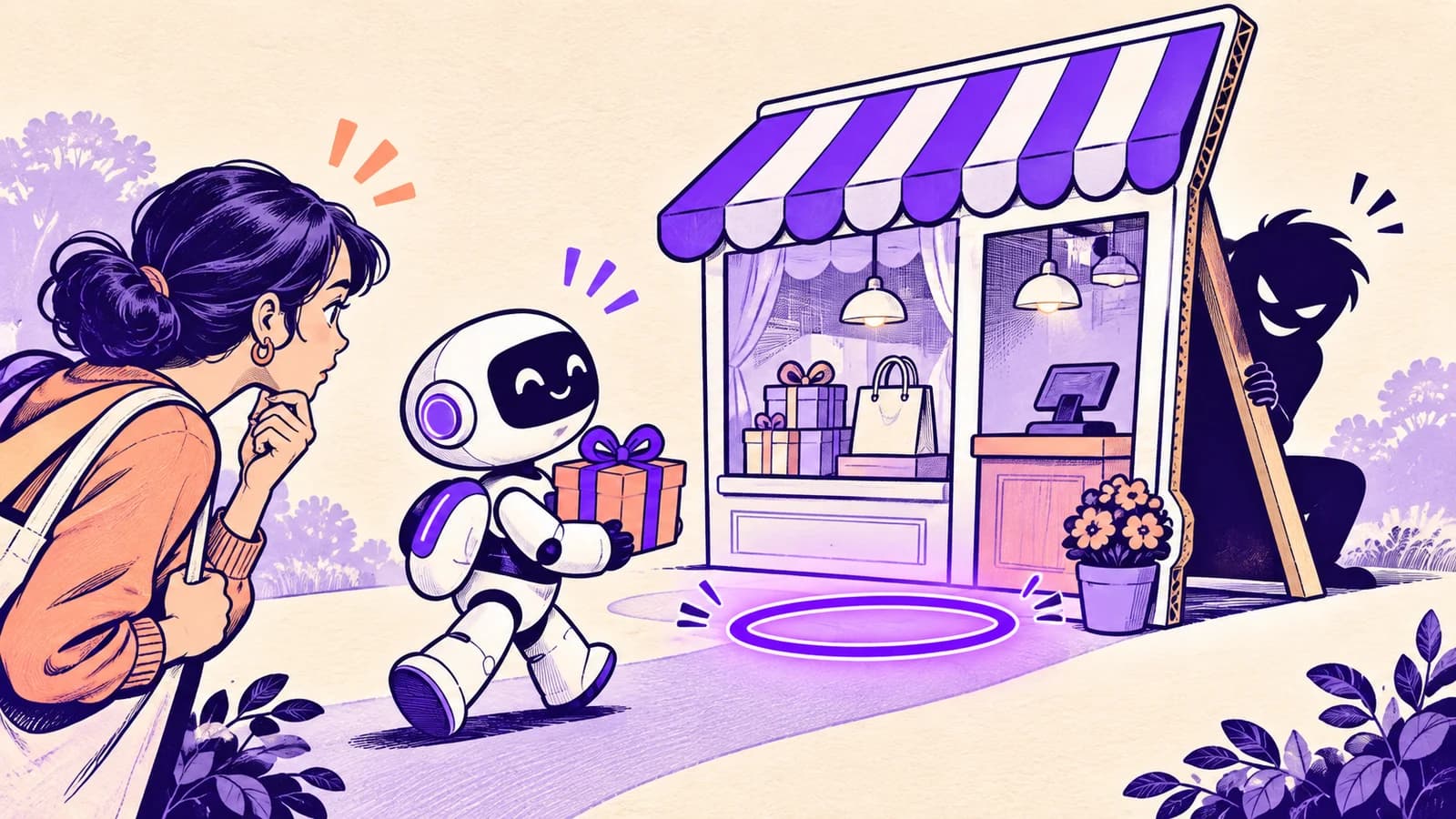
In August 2025, Guardio researchers published Scamlexity, a set of tests involving agentic AI browsers. One shopping scenario sent an assistant looking for an Apple Watch and placed a convincing fake retailer in its path.
The researchers reported that the assistant proceeded unsafely through the scenario. Their broader tests also explored phishing and malicious instructions. These were controlled traps, not evidence that a particular reader had their card stolen.
The useful finding is narrower than the scary headline: the assistant’s ability to complete shopping steps did not establish that it had correctly judged the store.
A bargain is not the same as a trustworthy seller
You already know the feeling of a deal that is suspiciously good. Perhaps the address is odd, the returns page is vague or the shop wants an unusual payment method. Those small doubts are part of shopping well.
An assistant focused on finding a specific item may keep moving toward checkout. It can sound decisive without having settled the questions you would care about. You may hear “I found it” and assume someone has checked the seller.
The risk is not only the price. Checkout can expose your home address, phone number and other details before any payment is finished.
What to check before the assistant checks out
Pause at the actual purchase. Open the seller’s site yourself, preferably through an address you already trust. Check the exact product, the full price and who will receive the payment.
Use your own judgment when a store asks to move the purchase into a chat, send money to an individual or provide a sign-in code. A helpful assistant should not turn that extra request into just another box to fill.
- Confirm the retailer, not just the logo or the product photo.
- Read the total, delivery terms and returns policy.
- Keep final payment approval with you, especially for a new seller.
Let it narrow the choices
There is still plenty of useful work to delegate: finding options, checking dimensions, comparing warranties and making a shortlist. You can save an hour without giving away the final purchase decision.
Leash can add review to clear payment requests and instructions in supported activity it inspects, and flag some suspicious requests. It is not a bank, a universal browser checkout blocker or a guarantee that a shop is genuine.
That is a sensible division of work. Your AI finds three good options. You decide which shop gets your money.